
How Medicare Coordinates with Employer or Union Coverage

Photo credit: Savy Bargains
In this article
If you have both Medicare and job-based insurance, coordination rules determine which pays first. Here is what you need to know.
Key Takeaways
- Whether Medicare or your employer plan pays first depends on the size of your employer and your specific situation.
- Employers with 20 or more employees must make Medicare the secondary payer for most active employees aged 65 and older.
- Retirees and people on COBRA generally have Medicare as their primary payer.
- Union coverage follows the same federal coordination rules as employer-sponsored plans.
- Enrolling in Medicare Part B at the wrong time can create coverage gaps that are difficult to fix later.
- A licensed benefits counselor or your State Health Insurance Assistance Program (SHIP) can help you assess your specific situation.
Why coordination rules matter
If you carry both Medicare and a job-based health plan, you cannot simply choose which one pays your medical bills. Federal law and plan contracts set a strict payment order. Sending a claim to the wrong payer first can result in a denial, delayed reimbursement, or unexpected out-of-pocket costs.
For a general introduction to Medicare Parts A, B, C, and D before reading further, see Medicare basics: a starting point for adults approaching 65.
The rules vary depending on whether you are still working, retired, on a disability, or continuing coverage through COBRA. Getting the order wrong can also affect your right to a Special Enrollment Period, which is the window to sign up for Medicare Part B without a late penalty after job-based coverage ends.
The primary and secondary payer framework
When you have two plans, one pays first (the primary payer) and the other pays second (the secondary payer). The secondary payer reviews what the primary payer did not cover and may pay some or all of those remaining costs, depending on its own rules.
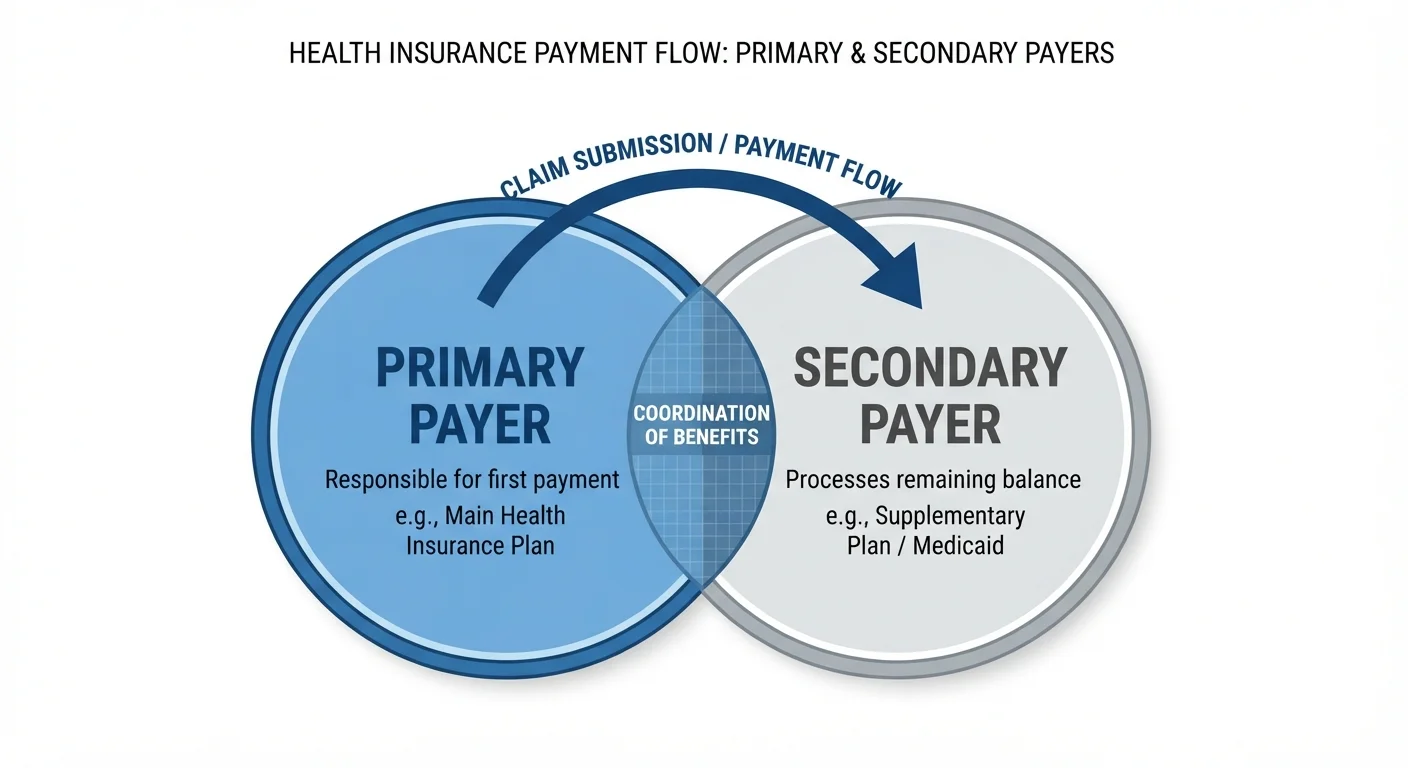
Medicare's role as primary or secondary payer is determined by the Medicare Secondary Payer (MSP) statute, a federal law. The main factors are employer size, your employment status, and the reason you have Medicare.
- Active employee, employer with 20 or more employees: the employer plan pays first; Medicare pays second.
- Active employee, employer with fewer than 20 employees: Medicare pays first; the employer plan pays second.
- Retiree coverage: Medicare pays first; the retiree plan pays second.
- COBRA continuation coverage: Medicare pays first; COBRA pays second.
- Medicare based on disability, employer with 100 or more employees: the employer plan pays first; Medicare pays second.
20
Employer size threshold that changes payment order
Employers with 20 or more employees must treat Medicare as the secondary payer for active employees aged 65 and older, per the Medicare Secondary Payer statute.
8 months
Special Enrollment Period after job-based coverage ends
Medicare allows an eight-month window to enroll in Part B without a late penalty after active employment coverage ends, according to Medicare.gov.
10%
Part B premium surcharge per year of late enrollment
Medicare adds a 10 percent surcharge to the Part B premium for each full 12-month period a person was eligible but did not enroll, per CMS guidelines.
Union coverage and how it fits in
Union-sponsored health plans follow the same federal coordination rules as other employer plans. Whether a union plan is primary or secondary depends on the same factors: your employment status and, where relevant, the size of the contributing employer group.
Retiree union coverage typically acts as a secondary payer once Medicare is in place. The union plan may cover deductibles, copayments, or services not fully paid by Medicare, but the precise benefits depend on the terms of your specific plan. Contact your union benefits office directly to confirm how your plan coordinates with Medicare.
Delaying Part B and Special Enrollment Periods
If you are still working and covered through a large employer (20 or more employees), you may be able to delay enrolling in Medicare Part B without a permanent late-enrollment penalty. When that job-based coverage ends, you generally have an eight-month Special Enrollment Period to sign up for Part B.
Retiree coverage, COBRA, and coverage purchased through the individual market do not qualify for this delay. Enrolling in Part B late in those situations can result in a 10 percent premium surcharge for each full 12-month period you were eligible but did not enroll.
For a full breakdown of enrollment windows and deadlines, see Medicare enrollment periods: a reference guide.
This article is for general informational purposes only and is not personalized insurance, legal, or financial advice. Coverage rules vary by plan and individual circumstances. Consult a licensed insurance counselor or your State Health Insurance Assistance Program (SHIP) for guidance specific to your situation.
Frequently Asked Questions

Author
Senior Editorial Team
Senior Editorial Team is the collective byline for our editorial team and contributor network. Articles published under this byline or an editorial pen name are researched, written, and reviewed according to our editorial standards for clarity, consistency, and independence before publication.
View all articles →