
Common Assumptions About Home Insurance That Can Leave You Underprotected
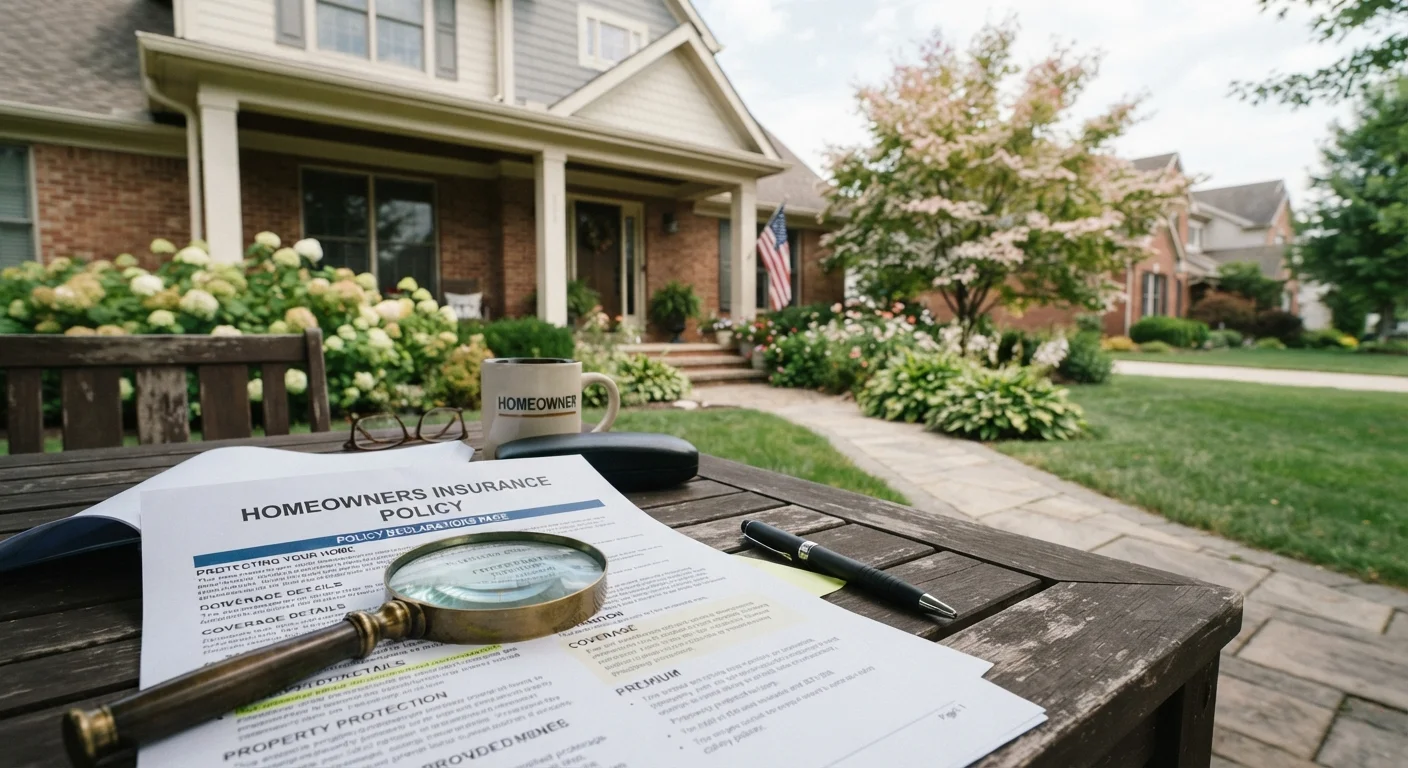
Photo credit: Savy Bargains
Many homeowners assume their policy covers more than it does. Here are the misunderstandings that most often lead to denied claims or coverage gaps.
Key Takeaways
- Standard home insurance policies do not cover flood or earthquake damage by default.
- Actual cash value payouts account for depreciation, often leaving homeowners short of replacement costs.
- Home-based business equipment and liability are typically excluded from personal homeowners policies.
- Sewer backup and water damage from the ground up usually require a separate rider or policy.
- Policy limits on jewelry, art, and electronics are often far lower than their actual value.
Why home insurance gaps are so common
Home insurance policies are long, detailed documents, and most people read them once, at closing, if at all. The result is that many homeowners carry policies they do not fully understand until something goes wrong. A denied claim is often the first indication that a coverage assumption was incorrect.
The misconceptions below appear across a wide range of homeowners, from first-time buyers to people who have held a policy for decades. Correcting them does not require specialized knowledge; it mainly requires knowing where to look and what questions to ask your insurer or a licensed agent. For a look at how these patterns appear in other types of coverage, see common auto insurance misconceptions and travel insurance myths vs. facts.
Myth
My home insurance policy covers all types of water damage, including floods.
Fact
Standard homeowners policies cover sudden, accidental water damage from interior sources, such as a burst pipe, but they do not cover flooding from external sources like heavy rain, storm surge, or overflowing rivers.
Flood damage requires a separate flood insurance policy, typically purchased through the National Flood Insurance Program (NFIP) or a private insurer. This distinction matters even for homeowners who do not live in designated high-risk flood zones: a significant share of flood claims come from properties outside those zones.
Sewer and drain backup is a related gap. Most standard policies also exclude damage caused by water backing up through a sewer or drain. A separate endorsement, sometimes called a water backup rider, is usually available to add this protection. Review your policy's water damage section carefully to understand exactly which scenarios are and are not included.
Myth
If my home is insured for its market value, I have enough coverage to rebuild after a total loss.
Fact
Market value and rebuilding cost are different figures. Construction costs, labor rates, and local material prices determine what it costs to rebuild, and those numbers often exceed what a property sells for on the open market.
Rebuilding after a total loss involves demolition, debris removal, labor, and materials, none of which are factored into a home's sale price. In areas with high labor costs or supply chain disruptions, rebuilding expenses can be substantially higher than the property's market value.
Insurers use a separate calculation called replacement cost value to estimate rebuilding expenses. If your policy's dwelling coverage limit is based on market value rather than replacement cost, you may face a significant shortfall. Ask your insurer to provide a replacement cost estimate and confirm whether your policy pays replacement cost or actual cash value (which deducts for depreciation) when you file a claim.
Myth
My home insurance covers my belongings at their full current purchase price.
Fact
Many standard policies pay actual cash value for personal property, which means the payout reflects the item's depreciated value at the time of the loss, not what it would cost to buy a replacement today.
A five-year-old laptop that cost $1,200 may be valued at $300 under an actual cash value calculation. If you want payouts that reflect current replacement prices, you need a policy that includes replacement cost coverage for personal property. This option typically costs more in premiums but reduces out-of-pocket costs after a covered loss.
High-value items such as jewelry, art, musical instruments, and collectibles face an additional problem: standard policies place dollar limits on these categories that are often well below their actual worth. A scheduled personal property endorsement, sometimes called a floater, lets you insure specific items for their appraised value. This is particularly relevant for anyone who has received jewelry as gifts or accumulated valuable items over time without updating their coverage.
Myth
Running a small business from home means my homeowners policy covers my business equipment and any client liability.
Fact
Homeowners policies generally exclude business property and business liability. Equipment used for business purposes, even part-time, may not be covered under a standard personal policy.
If a client visits your home and is injured, or if business equipment is stolen, a standard homeowners policy may deny the claim on the grounds that it involves business activity. This gap has become more common as more people work from home or run side businesses.
Options for addressing this include a home-based business endorsement added to an existing homeowners policy, or a separate business owner's policy (BOP) depending on the size and nature of the business. A licensed insurance agent can help you assess which approach fits your situation. This article provides general information and is not a substitute for personalized insurance advice.
Myth
My policy automatically increases coverage as my home's value rises over time.
Fact
Coverage limits are set at the time the policy is written or renewed. They do not automatically adjust to account for rising construction costs, home improvements, or inflation unless you have purchased a specific inflation guard endorsement.
Renovation projects are a common source of underinsurance. Adding a finished basement, a new addition, or a remodeled kitchen increases the cost to rebuild your home, but your coverage limit stays the same unless you notify your insurer and update the policy.
Some policies include an inflation guard clause that adjusts coverage limits annually based on a construction cost index, but this is not universal. It is worth reviewing your dwelling coverage limit whenever you make a significant improvement to the property. The same logic applies to personal property: if you acquire expensive items, update your insurer so your contents coverage reflects current value.
How to check your own policy for these gaps

Your policy's declarations page lists coverage types and their limits. The exclusions section, sometimes a separate document, names what the policy does not cover. Reading both together gives you a clearer picture than either one alone.
When reviewing personal property coverage, look for sub-limits on specific categories such as jewelry, firearms, silverware, and electronics. These caps apply even if your overall personal property limit is high. If you have items that fall into these categories, ask your insurer about scheduled endorsements.
For renters, the situation is different but equally important: a landlord's building policy does not extend to a tenant's belongings or personal liability. Renters insurance fills that gap. The broader pattern of being underinsured, and how to spot it, is also covered in this guide on underinsured coverage warning signs.
If anything in your policy is unclear, a licensed insurance agent (not just a customer service representative) can walk you through what the language actually means for your specific situation. Terms, exclusions, and available endorsements vary by insurer and by state, so general information only goes so far. This article is for educational purposes and does not constitute personalized insurance advice.

Author
Home & Lifestyle Editorial Team
Home & Lifestyle Editorial Team is the collective byline for our editorial team and contributor network. Articles published under this byline or an editorial pen name are researched, written, and reviewed according to our editorial standards for clarity, consistency, and independence before publication.
View all articles →