
Common Myths About Travel Insurance That Catch Travelers Off Guard

Photo credit: Savy Bargains
Many travelers assume their credit card or health plan covers them abroad. Here's what the evidence actually shows about these common beliefs.
Key Takeaways
- Credit cards and domestic health plans rarely cover the full cost of a medical emergency abroad.
- Travel insurance policies vary widely; reading the actual policy document is the only reliable way to know what is covered.
- Pre-existing condition coverage is often available but requires meeting specific eligibility rules at time of purchase.
- Trip cancellation coverage does not apply to every reason; most standard policies cover only named, specific causes.
- Emergency medical evacuation can cost tens of thousands of dollars and is seldom covered by basic health insurance.
Why these myths persist
Travel insurance is one of the more misunderstood purchases in trip planning, partly because coverage overlaps with other financial products travelers already carry. A health plan, a credit card with travel perks, and a homeowner's policy may each cover some travel-related losses in some situations. That partial overlap creates the impression that a dedicated travel policy is redundant. It rarely is.
The gaps become visible only when a claim is filed. By then, the options are limited. Understanding what each product actually covers, before departure, is the practical alternative. The myth-and-fact pairs below address the misconceptions that most often lead to denied claims or unexpected expenses.
Myth
My credit card travel benefits cover me the same way a travel insurance policy would.
Fact
Credit card travel benefits are limited in scope. They typically cover trip delay reimbursement or rental car damage but rarely include emergency medical coverage or evacuation.
Credit card travel perks are add-ons, not insurance policies. Most cards cap trip cancellation benefits at a few thousand dollars and exclude medical expenses entirely. Emergency evacuation alone can cost $50,000 or more depending on the destination, an expense that falls to the traveler when no standalone policy exists. Before assuming your card is sufficient, request the card's benefits guide and compare it line by line against what a dedicated travel policy covers. See what travel insurance typically covers for a fuller breakdown.
Myth
My regular health insurance plan will cover me if I get sick or injured overseas.
Fact
Most U.S. domestic health plans, including Medicare, provide little to no coverage outside the country. Some plans offer limited emergency reimbursement abroad, but the out-of-pocket exposure can still be substantial.
Medicare generally does not cover care received outside the United States, with narrow exceptions. Employer-sponsored plans vary, and many require you to pay upfront and seek reimbursement later, sometimes at reduced rates. Travelers with ongoing health conditions face added complexity. Planning around a pre-existing condition involves additional documentation steps that a domestic insurer may not support. Checking your plan's Summary of Benefits and Coverage document before departure will clarify what, if anything, applies internationally.
Myth
Travel insurance covers trip cancellation for any reason I choose.
Fact
Standard trip cancellation coverage applies only to specific named reasons listed in the policy, such as sudden illness, jury duty, or a named storm. A general change of mind is not covered unless the policy explicitly includes a 'cancel for any reason' (CFAR) upgrade.
CFAR is an optional add-on that not all insurers include and that typically reimburses only a percentage of prepaid costs, often 50 to 75 percent. It also usually must be purchased within a short window after the initial trip deposit, commonly 10 to 21 days. Reading the covered reasons list before purchasing saves travelers from learning this distinction at the worst possible moment.
Myth
Pre-existing conditions are never covered by travel insurance.
Fact
Many travel insurance policies include a pre-existing condition waiver if the traveler meets eligibility requirements, which typically include purchasing the policy within a set number of days of the first trip deposit and being medically fit to travel at the time of purchase.
The waiver window varies by policy, commonly ranging from 14 to 21 days after the initial deposit. Travelers who wait until the week before departure are often ineligible. The definition of 'pre-existing condition' also differs across policies; some use a look-back period of 60 days, others 180. Comparing these terms carefully is necessary before assuming a condition is or is not covered. Travelers with ongoing health conditions have specific planning steps worth reviewing before selecting any policy.
Myth
Travel insurance is only worth buying for international trips.
Fact
Domestic trips can also result in significant financial losses from cancellations, medical emergencies, or lost baggage. Whether a policy makes sense depends on the trip cost and the traveler's existing coverage, not the destination alone.
A domestic trip involving non-refundable hotel bookings, concert tickets, or a cruise carries real financial risk if an emergency forces cancellation. Coverage for domestic versus international trips differs in meaningful ways, and understanding those differences helps travelers decide what level of protection makes sense for each trip rather than applying a blanket rule.
Myth
If I buy travel insurance, I am covered no matter when something goes wrong.
Fact
Travel insurance policies include specific exclusions and timing rules. Events that occur before the policy's effective date, or that result from known and foreseeable situations at the time of purchase, are typically excluded.
A common example: if a hurricane is already named and tracked toward your destination when you purchase a policy, the disruption it causes is generally not covered. Similarly, purchasing insurance after you have already received a diagnosis or after a trip disruption has begun will not apply to that event. Timing matters as much as the coverage itself. The financial exposure from traveling without coverage is worth understanding before making a purchase decision.
How to read a policy before you commit
Every travel insurance policy has a declarations page, a schedule of benefits, and a full policy document. The schedule lists coverage maximums; the full document lists exclusions. Both matter equally. Travelers who read only the marketing summary may miss exclusions for adventure activities, alcohol-related incidents, or destinations under government travel advisories.
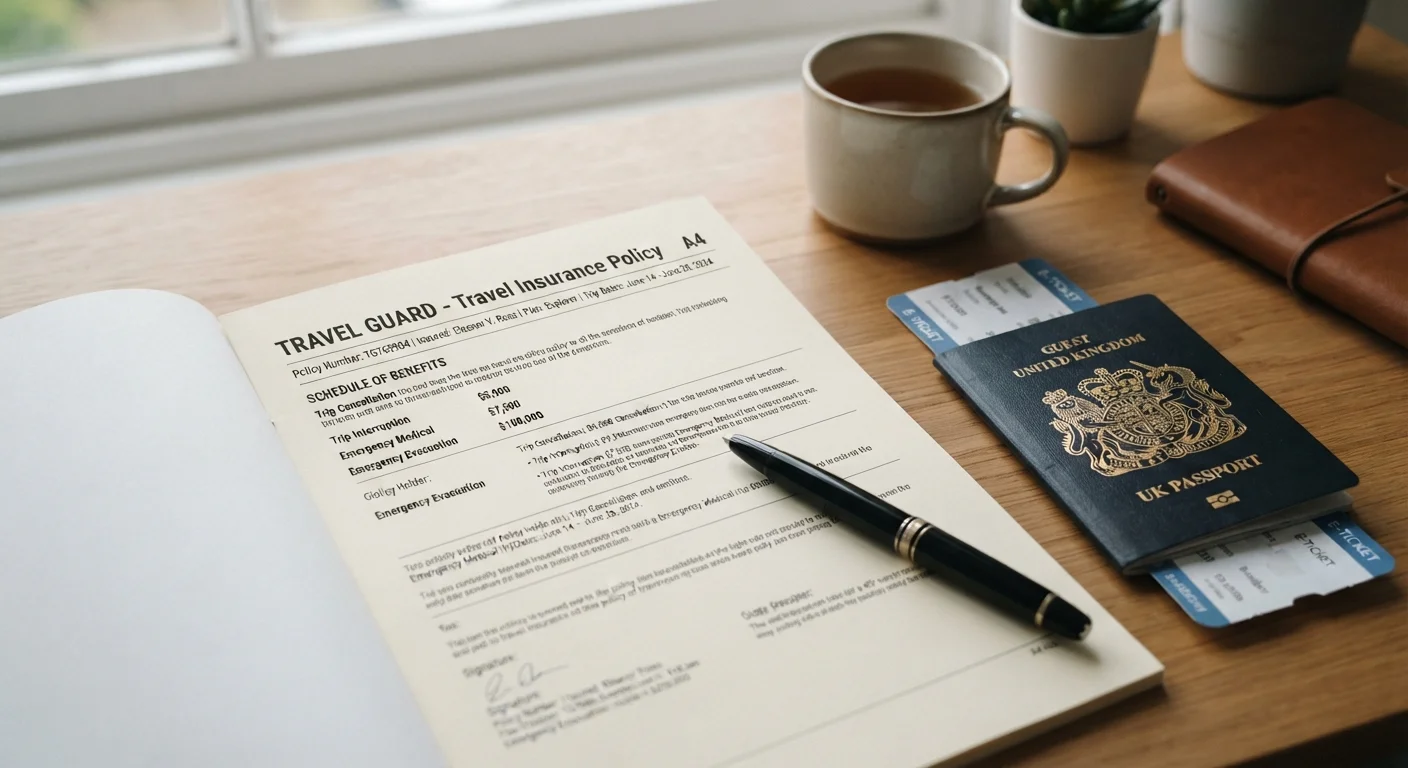
When comparing policies, look at the definitions section first. Terms like 'covered reason,' 'pre-existing condition,' and 'trip cost' have specific meanings that vary across insurers. A policy that covers a broader definition of trip cost, including prepaid excursions or event tickets, may offer more protection than one with a higher headline maximum but narrower definitions.
Coverage gaps are not unique to travel insurance. If you have noticed similar patterns with other policies, signs of being underinsured in health coverage follow comparable logic. For a broad overview of what travel insurance typically includes, this breakdown of coverage types is a useful starting point.
This article is for general informational purposes only and does not constitute insurance, financial, or legal advice. Policy terms, exclusions, and availability vary by provider and by state. Read your actual policy documents carefully and consult a licensed insurance professional for guidance specific to your situation.

Author
Travel Editorial Team
Travel Editorial Team is the collective byline for our editorial team and contributor network. Articles published under this byline or an editorial pen name are researched, written, and reviewed according to our editorial standards for clarity, consistency, and independence before publication.
View all articles →