
Coverage Gaps That Leave Drivers Financially Exposed

Photo credit: Savy Bargains
In this article
Certain situations fall outside standard policies. Learn which common scenarios are often uncovered and how drivers can address them.
Key Takeaways
- Standard liability coverage does not pay for your own vehicle repairs after an at-fault accident.
- Personal auto policies typically exclude coverage when a vehicle is used for rideshare or delivery work.
- Gap insurance is separate from standard coverage and matters most on financed or leased vehicles.
- Borrowed or rented vehicles can fall into coverage gray areas that many drivers never anticipate.
- Reviewing your declarations page and policy exclusions annually helps catch gaps before a claim.
Why standard policies leave gaps
Auto insurance is sold as protection, but every policy is also a document full of exclusions. The coverage you picture in your head when you pay your premium is often broader than what the policy actually delivers. Many drivers do not discover the difference until they file a claim.
State laws set minimums, but those minimums are designed to protect other people on the road, not you or your vehicle. Building a policy that actually covers your situation takes more than picking the cheapest option at renewal. See also common auto insurance misconceptions that lead drivers to assume they are protected when they are not.
The mistakes that create coverage gaps
Most coverage gaps trace back to a handful of predictable errors. Understanding them before something goes wrong is the only time it helps.
Assuming liability coverage protects your own vehicle after an accident you caused.
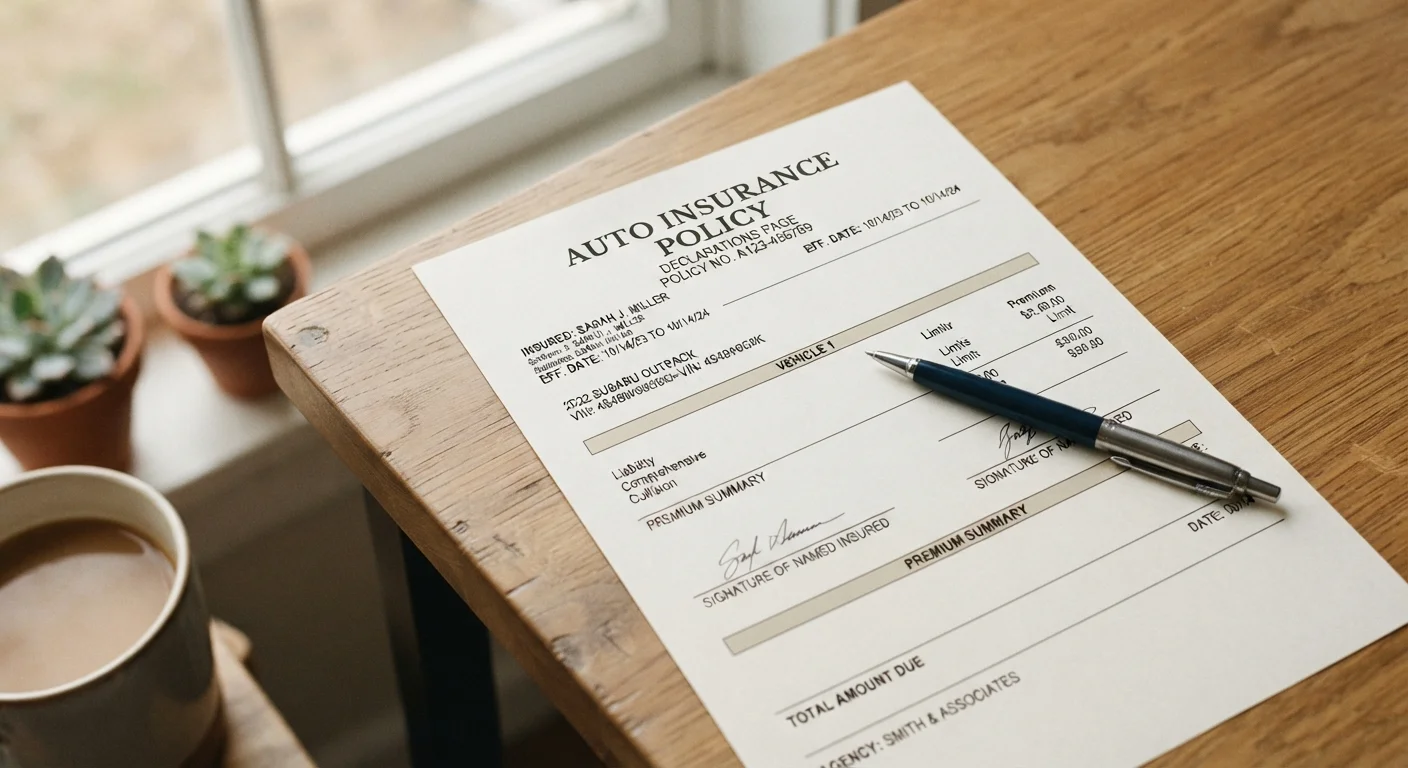
Why it happens: Liability sounds comprehensive, and many drivers never read past the coverage summary on their declarations page.
Using a personal auto policy for rideshare or delivery driving without checking exclusions.
Why it happens: The policy still applies while driving to the store, so drivers assume it applies during gig work too.
Skipping gap insurance on a financed or leased vehicle.
Why it happens: Drivers focus on the monthly premium and do not think about what happens if the car is totaled while they owe more than its current market value.
Believing a borrowed or rental vehicle is automatically covered under your existing policy.
Why it happens: Some policies do extend coverage to temporary vehicles, but the terms vary widely and many drivers assume full protection without verifying.
Letting a policy lapse without realizing the downstream effects on future premiums.
Why it happens: Drivers sometimes miss a payment or cancel without a replacement policy already in place, not knowing that insurers treat a coverage gap as a risk signal.
Beyond these individual errors, a broader pattern holds: drivers tend to set up a policy once and forget it. Life changes such as adding a driver, moving to a different ZIP code, or starting a side gig can all shift the risk picture. Reviewing your policy before switching is one place to catch these changes, but an annual check makes sense even if you plan to stay with the same insurer.
What to check on your current policy
Pull up your declarations page and look at two things: the coverage types listed and the limits next to each. Then read the exclusions section, which is usually near the back of the full policy document. That section spells out what the insurer will not pay for, and it often contains surprises.
If you use your vehicle in ways that differ from a standard commute and personal errands, ask your insurer directly whether those uses are covered. Written confirmation matters more than a verbal answer. Policies can differ significantly by insurer and by state, so general information from outside your policy is a starting point, not a substitute for reading your own documents or speaking with a licensed agent.
This article is for general informational purposes only and is not personalized insurance, financial, or legal advice. Coverage terms, exclusions, and availability vary by insurer and state. Read your policy documents carefully and consult a licensed insurance agent for guidance specific to your situation.

Author
Auto Editorial Team
Auto Editorial Team is the collective byline for our editorial team and contributor network. Articles published under this byline or an editorial pen name are researched, written, and reviewed according to our editorial standards for clarity, consistency, and independence before publication.
View all articles →