
Booking a Flight: What the Price Breakdown Actually Means
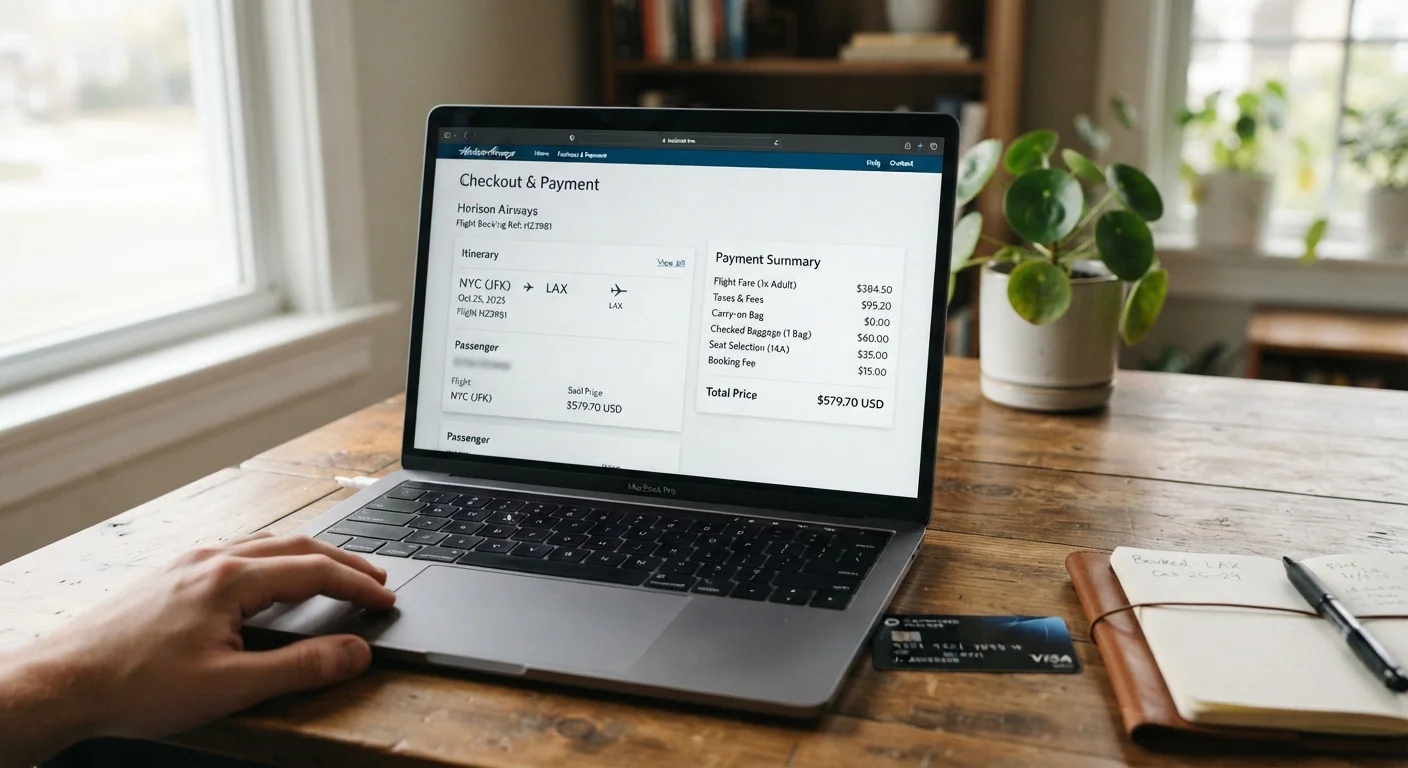
Photo credit: Savy Bargains
In this article
Taxes, carrier fees, seat upgrades — unpacked. Understand every line item on a flight booking before you hit confirm.
Key Takeaways
- The advertised fare is only part of what you pay; taxes and fees can add 20% or more to the base price.
- Government-imposed taxes are fixed costs you cannot avoid, but carrier-imposed fees vary by airline.
- Seat selection, checked bags, and travel insurance are optional charges that appear at checkout.
- Comparing fares across booking platforms requires checking the same fee inclusions on each site.
- Understanding each line item before confirming helps you avoid surprises on your card statement.
The base fare: what the airline actually charges
The base fare is the airline's price for transporting you from one airport to another. It changes based on how far in advance you book, how many seats remain in that fare class, the route, and seasonal demand. This number is set entirely by the airline.
Fare classes divide each cabin into booking codes (usually single letters like Y, K, or Q for economy). Each code carries its own price and set of rules about changes, cancellations, and upgrades. A cheaper code in economy often comes with more restrictions than a pricier code on the same flight. The base fare reflects which code you land in when you search.
One thing worth knowing: the base fare is the only part of the ticket that earns frequent flyer miles with most airlines. Higher fare classes typically earn more miles per dollar spent, which is worth factoring in if you use a loyalty program. For a plain-English explanation of fare classes and related terms, see the Travel Booking Basics reference guide.
Government taxes and airport fees
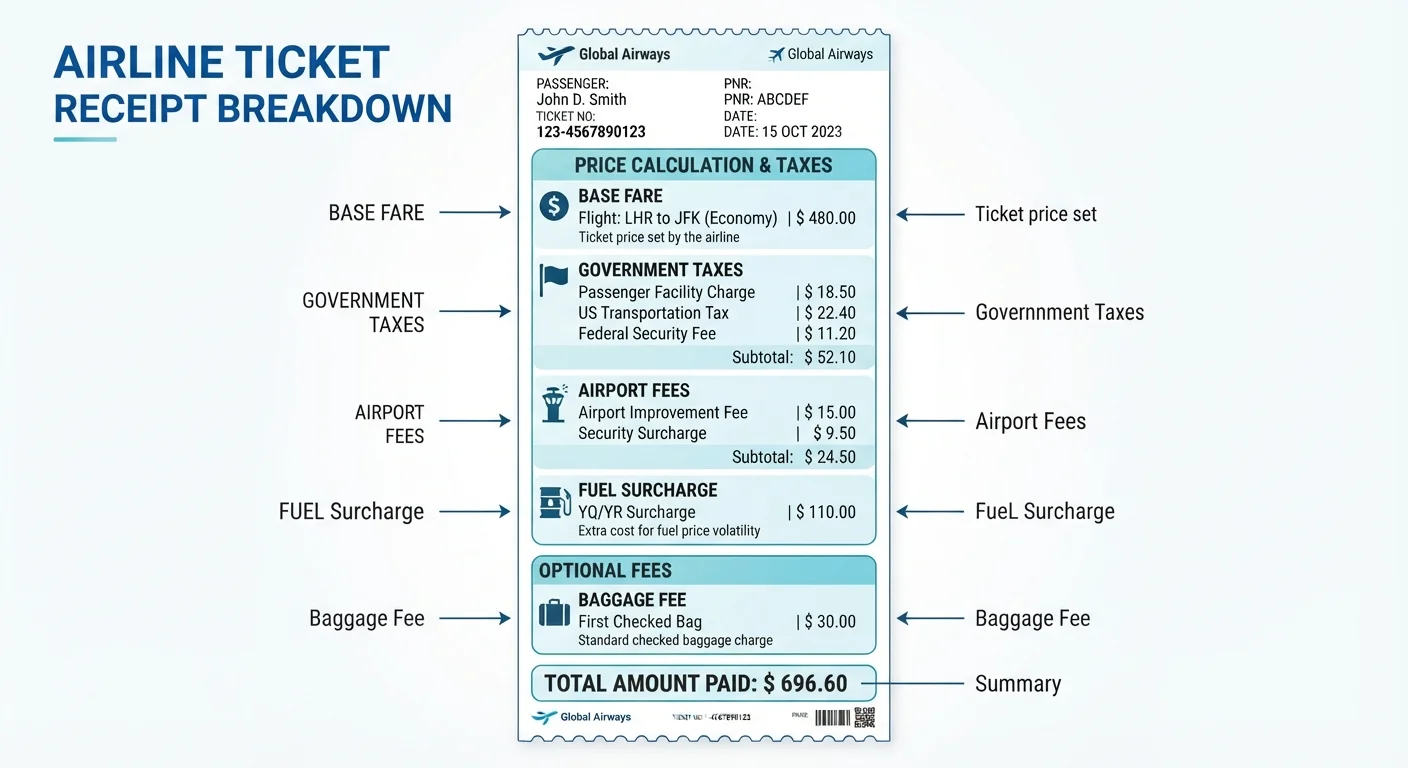
After the base fare, the next chunk of your total comes from taxes and fees set by governments and airports. These are not airline profits. They go to federal agencies, airport authorities, and sometimes foreign governments when you travel internationally.
For domestic U.S. flights, expect to see these common line items:
- U.S. federal excise tax: currently 7.5% of the base fare
- September 11th security fee: a per-segment fee collected by the TSA
- Passenger facility charge (PFC): collected by individual airports, capped per one-way trip
- Flight segment tax: a flat per-segment charge
International itineraries add foreign departure taxes, customs fees, and sometimes tourism levies that vary by country. These can be substantial on long-haul routes and are listed individually on the receipt.
None of these government charges are negotiable or avoidable. They are the same regardless of which booking platform you use for the same flight. Comparing this portion across sites is less useful than comparing the base fare and carrier fees.
Carrier-imposed fees and fuel surcharges
Below the government taxes, many receipts show a separate block labeled something like "carrier-imposed fees" or "YQ surcharge." These are fees the airline adds on top of the base fare. The YQ code historically refers to fuel surcharges, though airlines use it for a broader category of administrative recovery costs.
Unlike government taxes, carrier-imposed fees differ between airlines flying the same route. One carrier may charge a substantial fuel surcharge while a competitor charges none. This makes the base-fare-only comparison misleading: two flights priced identically on a search page can have very different totals once carrier fees appear.
Carrier-imposed fees are not the same as taxes
Government taxes appear on every booking for the same flight, regardless of platform. Carrier-imposed fees are set by the airline and can differ between carriers on the same route. When comparing fares, add up both categories to get an accurate sipb-by-side total. A booking platform may show the mandatory total but still exclude optional bag and seat fees from the headline price.
If you travel regularly or on a fixed income, understanding which charges are fixed versus discretionary matters for planning. The article Understanding Fixed vs. Variable Expenses explains that framing in a broader budgeting context.
Optional charges that appear at checkout
The final section of a flight price breakdown covers items you choose to add. These are not included in the mandatory total, but booking platforms present them in a way that can feel like required steps.
Common optional charges include:
- Checked baggage: fees vary by airline, route, and how many bags you check. Paying online before the airport is usually cheaper than paying at the counter.
- Seat selection: basic seats may be free; seats with extra legroom, window positions, or bulkhead rows typically carry a fee. Some tickets include seat selection; others assign you a seat automatically at no charge.
- Priority boarding: sold as a standalone add-on or bundled with seat upgrades.
- Travel insurance: offered by the booking platform, not the airline. You can decline and shop for a separate policy if you want coverage. For context on what travel without insurance can cost, see The Real Cost of Traveling Without Insurance.
Declining optional charges is always your right. If you travel light or book a fare that includes a bag, these additions can inflate a ticket price well beyond what you expected.
For seniors and travelers on fixed incomes, keeping optional fees in check is one of the more practical ways to manage the total trip cost. The guide Traveling on a Fixed Income covers that in more detail.
This article is for general informational purposes only. Airline fees, taxes, and fare rules change frequently. Verify current charges directly with airlines and booking platforms before purchasing a ticket.
Frequently Asked Questions

Author
Travel Editorial Team
Travel Editorial Team is the collective byline for our editorial team and contributor network. Articles published under this byline or an editorial pen name are researched, written, and reviewed according to our editorial standards for clarity, consistency, and independence before publication.
View all articles →