
Where Your Money Goes: Understanding Fixed vs. Variable Expenses
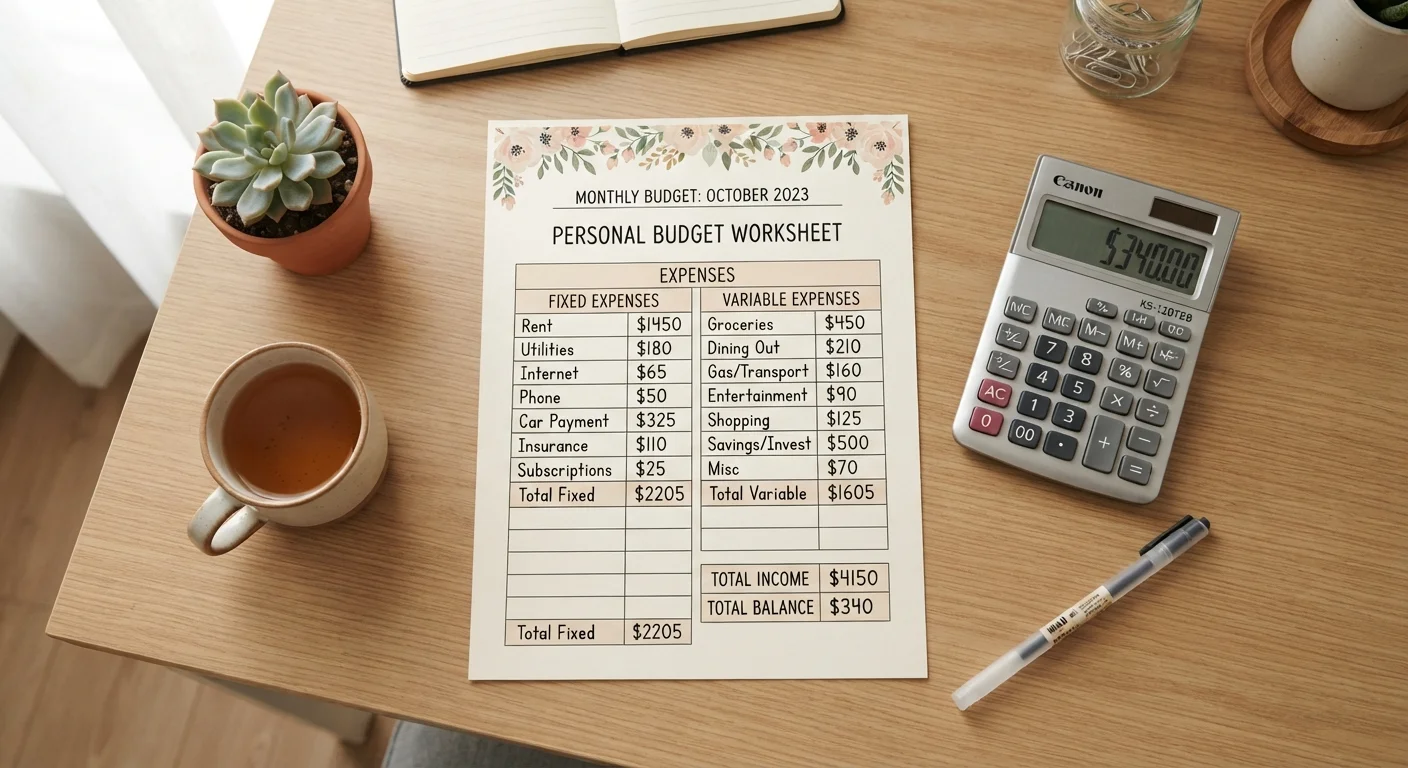
Photo credit: Savy Bargains
In this article
Fixed and variable expenses behave very differently in a budget. Learn the distinction and why it matters for managing your monthly cash flow.
Key Takeaways
- Fixed expenses repeat at the same dollar amount each period and are easier to plan around.
- Variable expenses fluctuate and are often where day-to-day spending decisions have the most impact.
- Some costs are semi-variable, meaning they have a fixed base but a portion that changes with use.
- Identifying which expenses are fixed helps you calculate the minimum income you need each month.
- Variable expenses are generally where budget adjustments are most achievable.
- This article provides general financial education and is not personalized financial advice.
The two categories that shape every budget
Every dollar you spend each month falls into one of two basic categories: costs that stay predictable and costs that move around. That distinction, fixed versus variable, is not just accounting terminology. It tells you how much control you have over each line item and how much flexibility your budget actually contains.
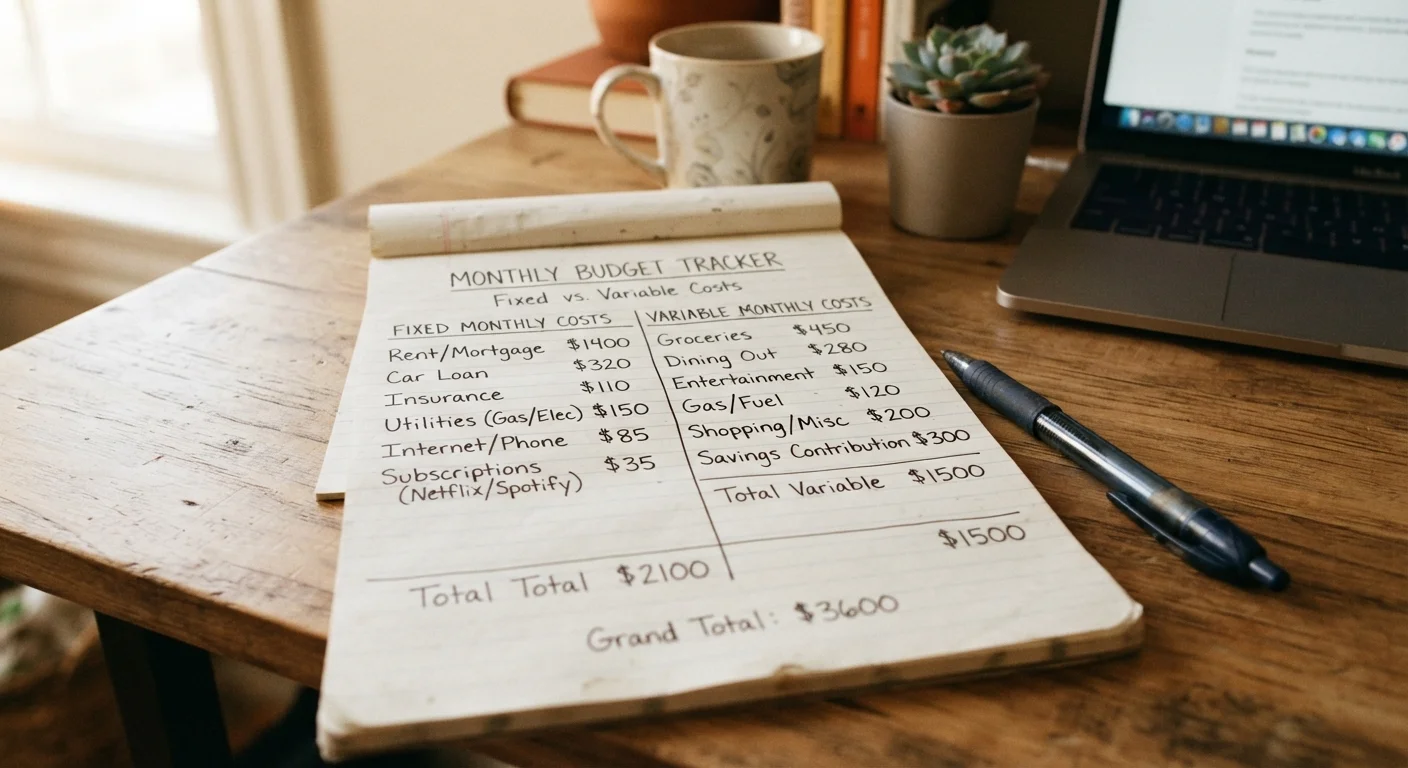
Fixed expenses are amounts that do not change from one period to the next. You owe the same number every month regardless of how much you use a service or how your circumstances shift in small ways. A mortgage payment, for example, is set by your loan agreement and stays constant until the loan is paid or refinanced. The same applies to a car loan installment, a renter's insurance premium, or a fixed-rate internet plan.
Variable expenses are different because the amount changes. Groceries, gasoline, medical co-pays, and restaurant meals all shift month to month based on what you buy, how much you use, and sometimes prices you cannot control. Variable expenses are not inherently bad or wasteful; many are necessary. The point is that they move, and a realistic budget accounts for that movement.
A third category worth knowing is semi-variable, sometimes called mixed expenses. These have a stable base charge plus an amount that shifts with usage. A natural gas bill with a flat service fee and a consumption-based charge is a common example. Fixed-rate and variable-rate energy plans behave the same way at the plan level, and understanding that structure helps you anticipate your total bill more accurately.
Why the distinction matters for cash flow
Your fixed expenses, added together, give you the minimum monthly income you need to meet your core obligations. That number is useful. It tells you how much breathing room exists between what you earn and what you must spend before any discretionary choices are made.
~33%
Average share of income spent on housing
According to the U.S. Bureau of Labor Statistics Consumer Expenditure Survey, housing consistently accounts for roughly a third of average household spending, making it the largest fixed expense category for most Americans.
~15%
Average share of income spent on food
The same BLS survey data shows food spending at roughly 12 to 15 percent of household budgets, split between grocery purchases and dining out, both of which are variable in nature.
3 months
Recommended data window for variable expense averages
Personal finance educators commonly suggest reviewing at least three months of transaction history to establish a realistic average for variable spending categories before setting a budget figure.
Variable expenses are where most day-to-day financial decisions happen. Because they fluctuate, they are also where adjustments are most achievable when income is tight or a financial goal requires redirecting money. Cutting a fixed expense often requires a larger action, such as refinancing a loan, moving to a less expensive home, or canceling a contract. Trimming variable spending can happen incrementally.
For anyone working to build financial breathing room, mapping out which costs are fixed first creates a clearer picture of what is truly flexible. Without that separation, it is easy to underestimate obligations and overestimate how much discretionary income is available.
Putting the categories to work in a real budget
The practical step is to list your recurring monthly costs and label each one. Pull recent bank and credit card statements, go line by line, and note whether each amount is the same every time or varies. Fixed items go in one column; variable items go in another.
For variable expenses, look at two or three months of data rather than a single month. A one-month snapshot can be misleading because spending on categories like clothing or home supplies tends to cluster. Averaging a few months gives a more reliable estimate to build around.
Semi-variable costs deserve their own review. Look at the fixed portion as a committed cost and treat the variable portion as adjustable. That distinction matters when you are deciding where to focus if you need to reduce monthly outflows.
Maintaining a budget over time depends on revisiting these categories when circumstances change, including after a lease renewal, an insurance premium adjustment, or a shift in income. Fixed costs do not stay fixed forever, and a budget that reflects current reality is more useful than one built on outdated figures.
For those on a fixed income, the same framework applies and can be especially useful for planning discretionary spending, including travel. Stretching a travel budget on a fixed income starts with the same question: what is committed and what can be adjusted?
This article is for general informational and educational purposes only. It does not constitute personalized financial advice. Consult a qualified financial professional for guidance specific to your situation.
Frequently Asked Questions

Author
Finance Editorial Team
Finance Editorial Team is the collective byline for our editorial team and contributor network. Articles published under this byline or an editorial pen name are researched, written, and reviewed according to our editorial standards for clarity, consistency, and independence before publication.
View all articles →