
Personal Auto Policy vs. Usage-Based Insurance: How the Two Approaches Differ

Photo credit: Savy Bargains
In this article
Traditional policies price risk on demographics; usage-based programs track actual driving. Here is a clear look at how each model works.
Key Takeaways
- Traditional auto policies set your premium using demographic factors like age, credit score, and ZIP code.
- Usage-based insurance programs track real driving behavior through a mobile app or plug-in device.
- Drivers who log few miles or drive cautiously may see lower rates under a usage-based program.
- Privacy trapb-offs and inconsistent scoring methods are real considerations with usage-based programs.
- Both models can include the same coverage types; the difference is in how the price is calculated.
How traditional auto policies calculate your premium
A standard personal auto policy (PAP) sets your premium before you drive a single mile. Insurers feed your application data into a rating model and assign a price based on how drivers who share your profile have historically performed as a group. The main inputs include:
- Age and years of licensed driving experience
- Credit-based insurance score (in most states)
- Garaging address, which maps to a rating territory (see how ZIP code rating works)
- Vehicle make, model, and model year
- Prior claims and violations on your driving record
- Annual mileage, which you self-report
That last point matters. Self-reported mileage is an estimate, not a verified figure. A driver who puts down 8,000 miles a year and actually drives 14,000 is paying a rate that does not reflect their real exposure. For more on the factors that go into that calculation, see what shapes premiums beyond your driving record.
Rates are reviewed at renewal, typically every six or twelve months, and can shift if your record changes, if your insurer adjusts its statewide rates, or if you move. But within a policy term, your premium is fixed.
How usage-based insurance works
Usage-based insurance (UBI) replaces group-average estimates with data from your actual trips. Programs generally fall into two types: pay-per-mile, which charges a base rate plus a per-mile fee, and behavior-based (often called telematics), which scores your driving habits and adjusts your renewal premium accordingly.
Data is collected through a plug-in OBD-II device that connects below your steering column, a smartphone app, or a factory-connected vehicle system. Common variables tracked include:
- Miles driven
- Hard braking and rapid acceleration events
- Cornering force
- Speed relative to posted limits
- Time of day (late-night driving is generally scored as higher risk)
- Phone handling while the vehicle is moving
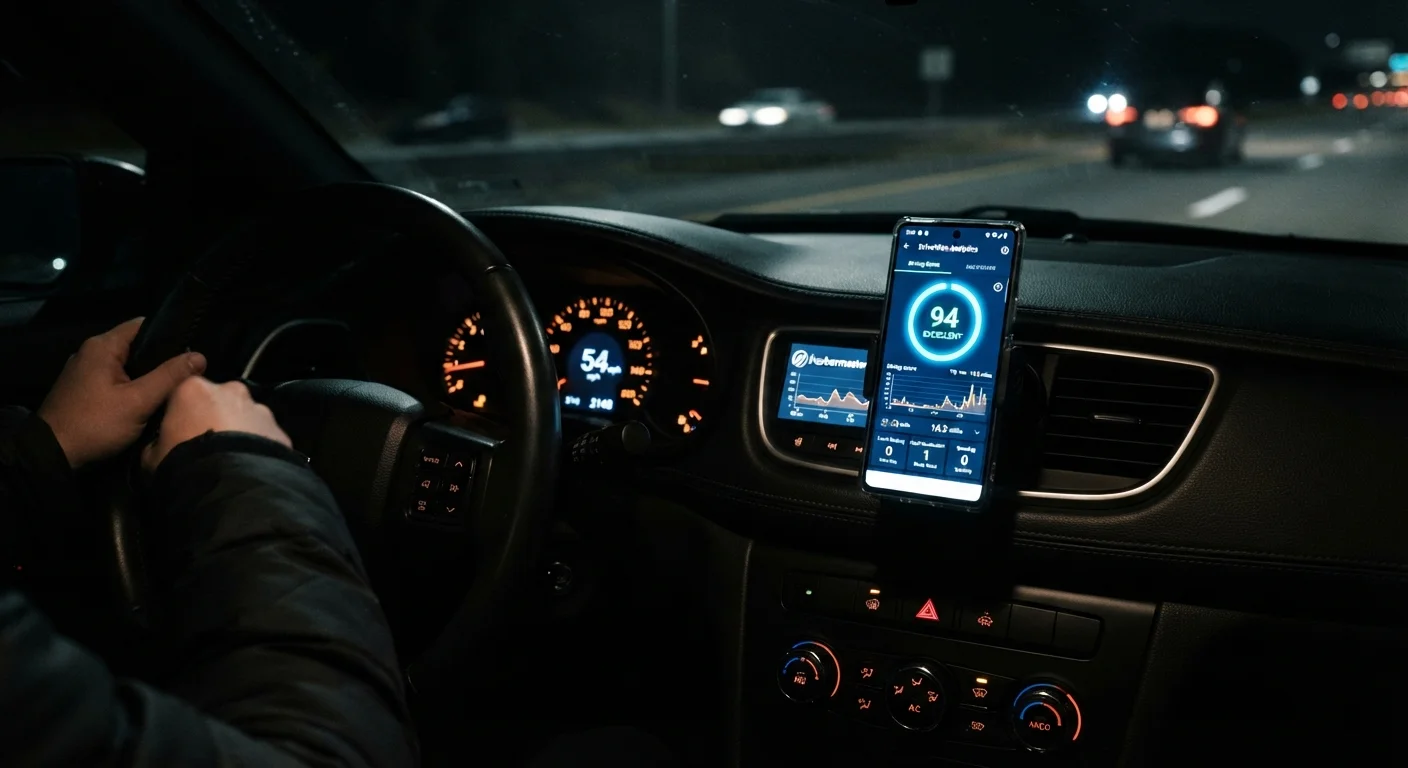
At renewal, the insurer factors your driving score into your new rate. Programs vary widely in how much the score can move your premium, and in which behaviors carry the most weight. Reading the program's disclosure document before enrolling tells you exactly what is being measured and how.
Certain misconceptions about what these programs can and cannot do are worth checking against reality. The common auto insurance misconceptions article covers several that apply here.
Where the two models diverge
The practical differences go beyond data collection.
| Traditional auto policy | Usage-based insurance | |
|---|---|---|
| How price is set | Demographic and historical group data | Actual driving behavior and mileage |
| Mileage accuracy | Self-reported estimate | Verified by device or app |
| In-term premium stability | Fixed until renewal | Can vary at renewal based on score |
| Data sharing required | None beyond application | Ongoing trip data shared with insurer |
| Potential savings for safe drivers | Limited to good-driver discounts | Score-based discount at renewal |
| Coverage types available | Full range of standard coverages | Full range of standard coverages |
Coverage types available under each model are largely the same. Both can include liability, collision, comprehensive, uninsured motorist, and medical payments coverage. If you want to understand what gaps can exist regardless of which pricing model you choose, coverage gaps drivers commonly miss is worth reading before you finalize any policy.
One distinction that often goes unnoticed involves state regulation. Not every state permits credit scoring as a rating factor, and a handful restrict or are considering restrictions on telematics data use. Your state insurance department's website lists what is and is not allowed where you live.
Privacy and data considerations
Sharing continuous driving data with an insurer is a meaningful decision. The data collected by a telematics program can show when and where you drive, how often, and your behavior at the wheel. Insurers typically describe how data is stored, whether it is shared with third parties, and whether it could be used in a claim investigation. Those disclosures are in the program terms, not the marketing materials.
Pay-per-mile programs collect somewhat less behavioral data than full telematics programs, though they still record location and mileage. Drivers who are uncomfortable with that level of monitoring generally find that a traditional policy sidesteps the question entirely, since the rating inputs are demographic rather than trip-by-trip.
This article is general insurance information and is not personalized advice. Coverage terms, program availability, and state regulations vary by insurer and location. Review actual policy documents and consult a licensed insurance agent before making coverage decisions.

Author
Auto Editorial Team
Auto Editorial Team is the collective byline for our editorial team and contributor network. Articles published under this byline or an editorial pen name are researched, written, and reviewed according to our editorial standards for clarity, consistency, and independence before publication.
View all articles →