
State Minimum vs. Full Coverage: Understanding the Trapb-offs
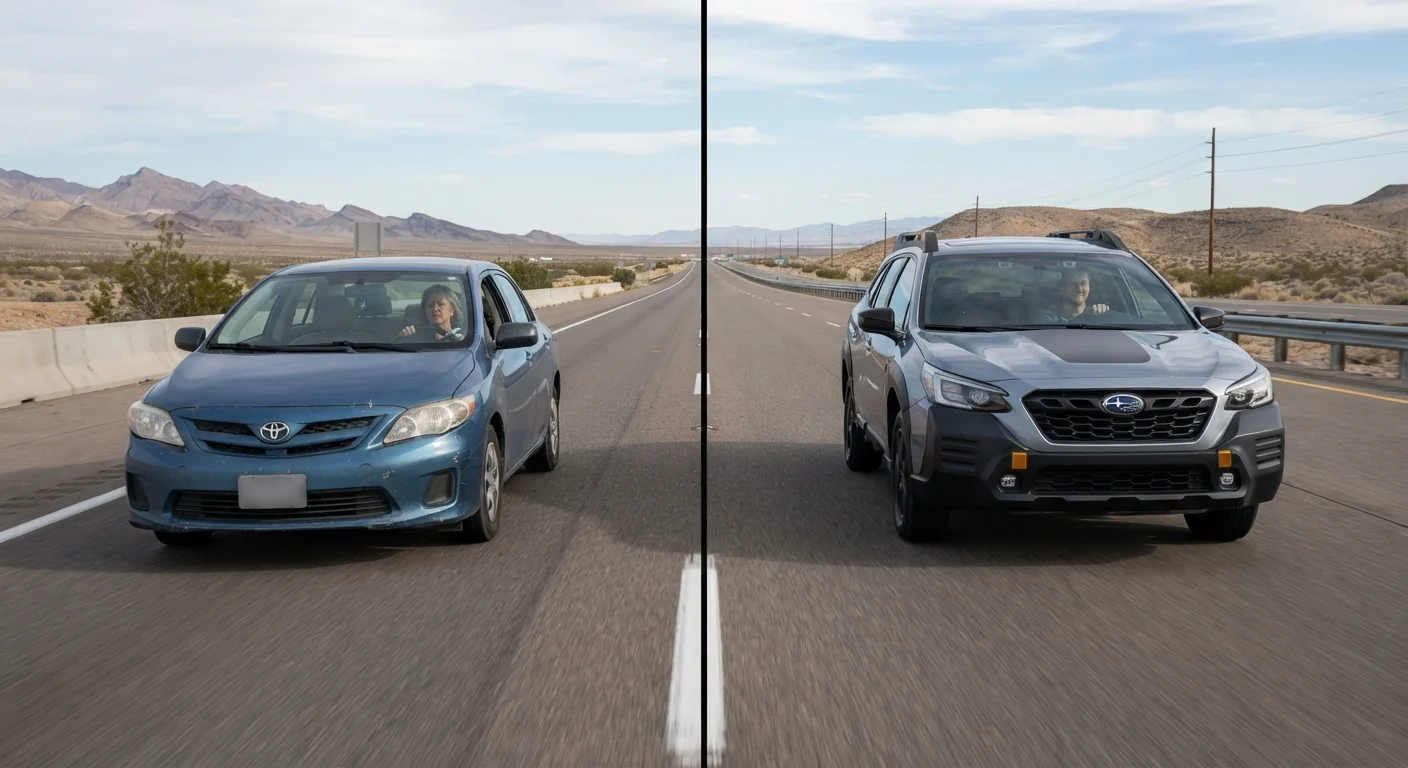
Photo credit: Savy Bargains
In this article
Minimum coverage keeps you legal; fuller coverage protects your finances. See what each level actually includes and what it leaves out.
Key Takeaways
- State minimum coverage satisfies legal requirements but pays nothing toward your own vehicle damage.
- Full coverage typically adds collision and comprehensive protection, covering your car in many scenarios.
- Lenders usually require full coverage on financed or leased vehicles.
- The right level depends on your vehicle's value, your savings, and your monthly budget.
- Neither coverage type is absolute: gaps can exist in both, so reading your policy matters.
What state minimum coverage actually includes
Every state except New Hampshire requires drivers to carry at least some auto insurance. That baseline is called state minimum coverage, and its core component is liability insurance. Liability pays for injuries and property damage you cause to others in an accident. It does not pay anything toward your own vehicle.
Liability limits are written as three numbers, such as 25/50/20. In that example, the policy pays up to $25,000 per injured person, $50,000 total per accident for bodily injury, and $20,000 for property damage to the other party. If costs exceed those numbers, you owe the difference personally.
Some states also require personal injury protection (PIP), which covers your own medical bills and lost wages regardless of who caused the crash, or uninsured motorist coverage, which steps in when the other driver has no insurance. These additions vary by state.
Minimum limits vary by state
Every state sets its own minimum liability limits, and they differ significantly. Some states require personal injury protection (PIP) or uninsured motorist coverage in addition to basic liability. Before assuming what your state requires, verify the current rules with your state's department of motor vehicles or insurance commissioner.
What minimum coverage never includes: repairs or replacement for your own car after a collision, damage from theft, fire, flooding, or animals, and no protection if a tree falls on your vehicle in a storm. Those scenarios require additional coverage types.
What full coverage adds to the picture
The term 'full coverage' is informal. No policy covers every possible situation, and the phrase does not appear in most actual policy documents. In practice, it refers to a combination of liability plus two additional coverage types: collision and comprehensive.
Collision pays to repair or replace your vehicle when it hits another car or object, regardless of fault. Comprehensive covers damage from events outside a collision, including theft, vandalism, hail, flooding, falling objects, and animal strikes.
Both collision and comprehensive come with a deductible, the amount you pay before the insurer pays the rest. Choosing a higher deductible lowers your monthly premium; a lower deductible means you pay less out of pocket per claim but more each month. The insurer pays up to the vehicle's actual cash value, not its replacement cost, so depreciation matters when estimating what a payout would cover.
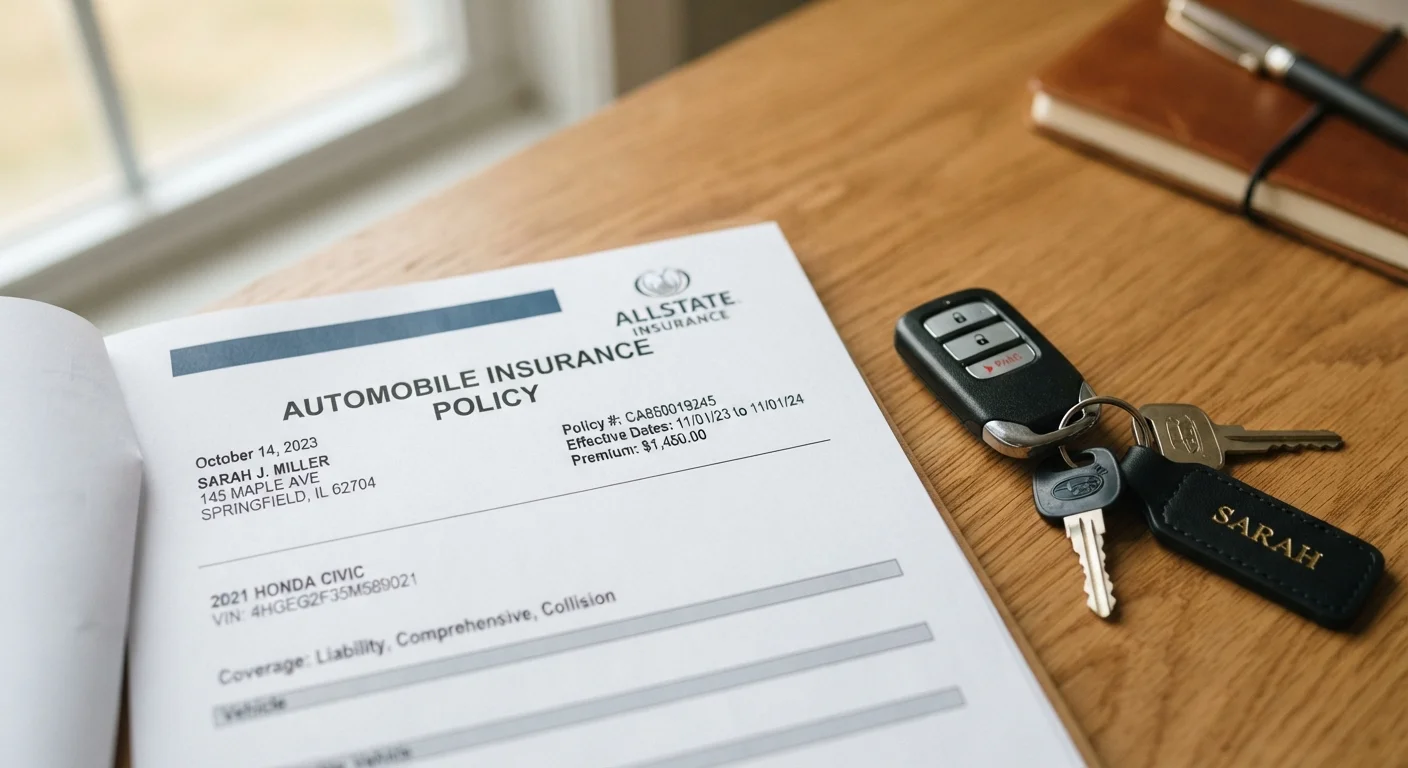
For drivers with financed or leased vehicles, lenders almost always require both collision and comprehensive coverage. Dropping to minimum coverage on a financed car typically violates the loan agreement and can trigger the lender to add their own coverage at a much higher cost. See how gap insurance fits into this picture if you owe more on the car than its current market value.
How to weigh the trapb-offs
The central question is not which option sounds better; it is which level of risk you can realistically absorb.
| Criterion | State Minimum Coverage | Full Coverage |
|---|---|---|
| Liability (bodily injury) | Yes, at state-set limits | Yes, often at higher limits |
| Liability (property damage) | Yes, at state-set limits | Yes, often at higher limits |
| Collision coverage | Not included | Included |
| Comprehensive coverage | Not included | Included |
| Your vehicle after an at-fault crash | Not covered | Covered up to actual cash value |
| Theft or weather damage | Not covered | Covered under comprehensive |
| Required for financed/leased vehicles | No | Typically yes |
| Monthly premium | Lower | Higher |
A common rule of thumb is that collision and comprehensive may not be worth carrying on a vehicle worth less than roughly ten times the combined annual premium for those coverages. The logic: if the car's actual cash value is low, the maximum payout after a deductible may be smaller than the total premiums paid over time. This is a rough guide, not a guarantee, and your own financial cushion matters just as much as the math.
Drivers who carry minimum coverage and get into an at-fault accident with significant injuries or an expensive vehicle can face personal liability far beyond the policy limits. That financial exposure is real and should factor into the decision. For more on what policies often leave out, coverage gaps that drivers commonly miss covers several scenarios worth knowing about.
There are also misconceptions worth clearing up before you decide. Common things drivers get wrong about auto insurance explains why 'full coverage' is not the same as 'total protection' and why some assumptions about what's covered can lead to surprises after a claim.
This article is for general informational purposes only and is not personalized insurance, financial, or legal advice. Coverage terms, requirements, and availability vary by state and insurer. Read your actual policy documents and consult a licensed insurance agent for guidance specific to your situation.

Author
Auto Editorial Team
Auto Editorial Team is the collective byline for our editorial team and contributor network. Articles published under this byline or an editorial pen name are researched, written, and reviewed according to our editorial standards for clarity, consistency, and independence before publication.
View all articles →