
Planning a Trip Around a Pre-Existing Condition: What Travelers Should Know
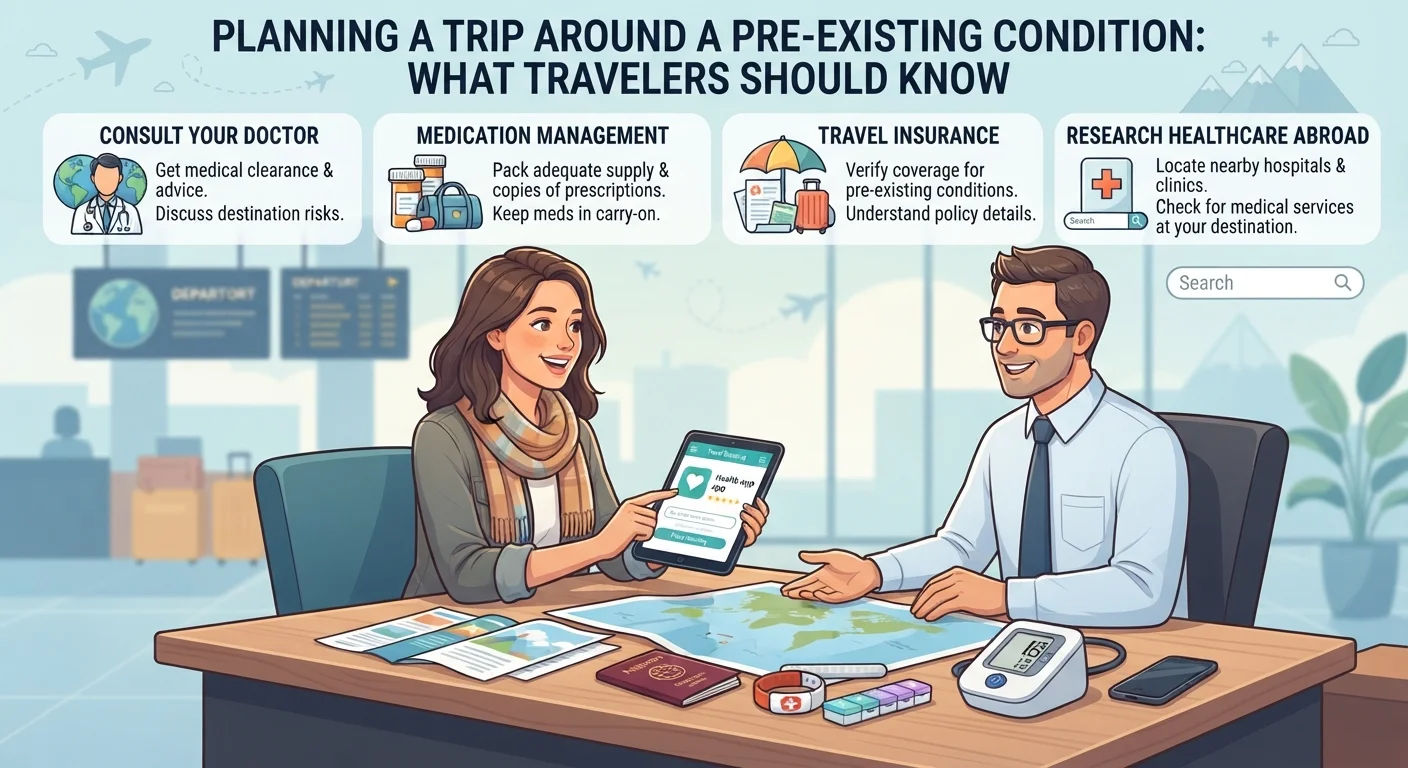
Photo credit: Savy Bargains
In this article
Travelers with ongoing health conditions face unique planning steps. This guide covers documentation, insurance waivers, and when to consult a doctor.
Key Takeaways
- A pre-existing condition waiver can extend travel insurance coverage to include flare-ups of known conditions.
- Carry a written summary of your diagnoses, medications, and emergency contacts in your travel documents.
- Consult your physician before booking, especially for long-haul or international travel.
- Domestic health insurance often provides limited or no coverage outside its network or abroad.
- Destination health infrastructure varies widely; researching local medical facilities matters before you book.
Why pre-existing conditions require a different planning approach
Traveling with a chronic illness, managed condition, or recent diagnosis introduces variables that standard trip planning does not address. A flare-up far from home can mean navigating an unfamiliar health system, locating a pharmacy that stocks your medication, or arranging emergency care in a country where your domestic insurance is not accepted.
The planning steps below are not about discouraging travel. Most people with well-managed conditions travel safely and without incident. The goal is to reduce the chance that a manageable situation becomes a costly or dangerous one because of a gap in preparation.
For travelers over 65, the stakes are often higher. See our checklist for senior travelers for a broader look at accessibility, documentation, and booking considerations specific to that age group.
Best practices before you book
Schedule a pre-trip medical consultation at least four to six weeks before departure
Your physician can assess whether your condition is stable enough for travel, update prescriptions, and recommend destination-specific precautions. Waiting until the week before a trip limits your options if a change in treatment is needed.
Obtain a signed physician's letter describing your condition and treatment
A physician's letter helps foreign medical providers understand your history quickly and can assist at customs when carrying syringes, controlled medications, or medical devices. It also documents stability for insurance purposes.
Research your destination's medical infrastructure before booking
Medical care quality and availability differ widely by country and region. Rural or remote destinations may lack specialists, specific medications, or equipment relevant to your condition.
Buy travel insurance with a pre-existing condition waiver within the policy's eligible window
Purchasing coverage early after your first trip deposit is the most common way to qualify for a waiver. Waiting too long closes this option, leaving condition-related claims subject to exclusion.
Pack medications in carry-on luggage with original pharmacy labels
Checked baggage can be delayed, lost, or subject to temperature extremes that degrade medications. Original labels confirm the prescription is valid and prescribed to you.
Register with the U.S. State Department's STEP program for international travel
The Smart Traveler Enrollment Program (STEP) allows the nearest U.S. embassy or consulate to contact you in an emergency and provides access to updated safety and medical advisories for your destination.
Understanding pre-existing condition waivers in travel insurance
Standard travel insurance policies often exclude claims that relate to a pre-existing condition. A pre-existing condition waiver is a policy provision that removes or narrows that exclusion, allowing coverage for unexpected medical events tied to a known condition.
To qualify for a waiver, most policies require that you purchase the policy within a set window after making your first trip deposit, typically 14 to 21 days, though this varies by policy. Some policies also require that your condition be considered stable, meaning no changes in treatment, medication, or symptoms within a defined look-back period before purchase.
Coverage terms, exclusions, and eligibility rules differ significantly across policies. Reading the actual policy document matters more than reading marketing summaries. A licensed insurance agent can help clarify what a specific policy covers for your situation. For a broader look at what travel insurance does and does not do, common myths about travel insurance is worth reviewing before you compare plans.
This article provides general information about travel insurance concepts. It is not personalized insurance or financial advice. Coverage, premiums, and eligibility depend on the individual and the policy. Always read policy documents carefully and consult a licensed agent for guidance specific to your circumstances.
What to carry and confirm before departure
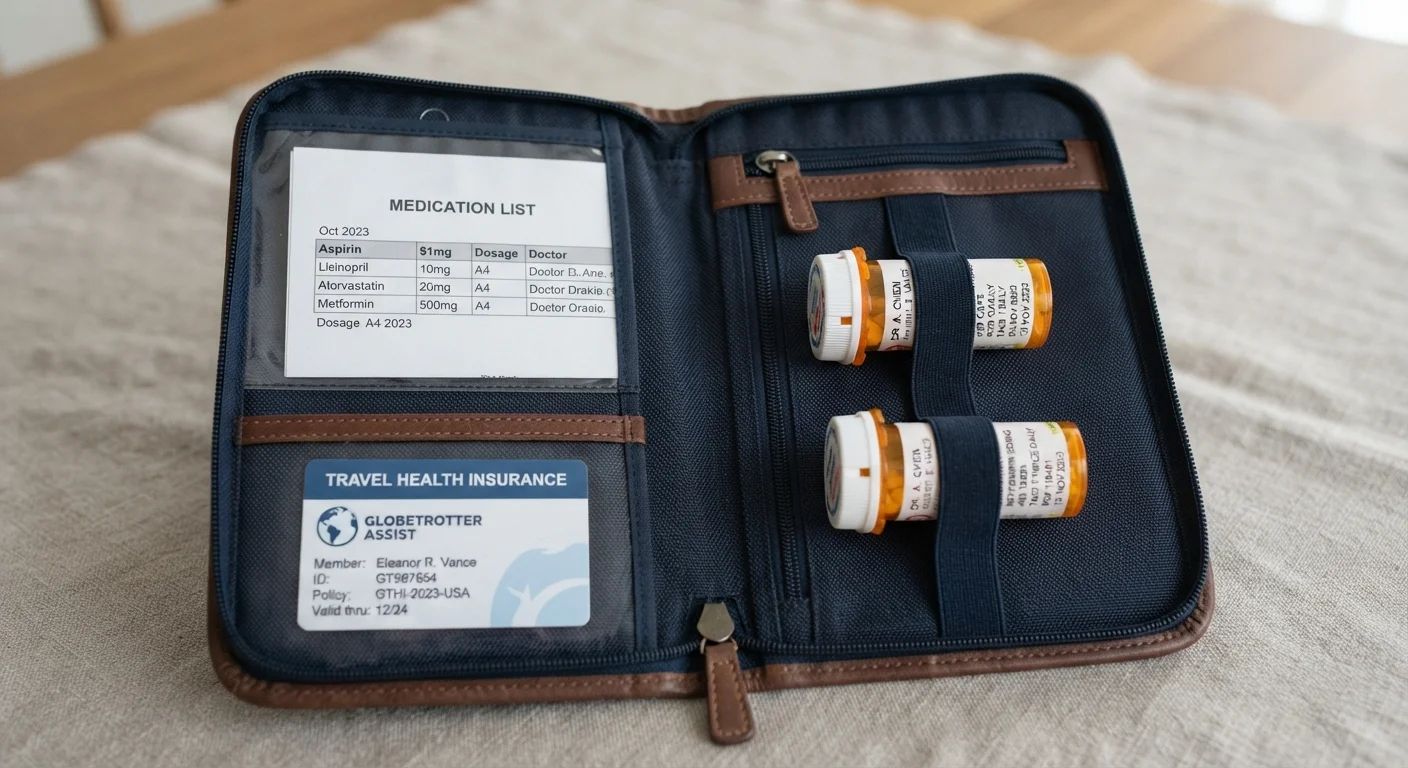
Documentation is the practical backbone of safe medical travel. A written summary of your diagnoses, current medications (with generic names, dosages, and prescribing physician contact), known allergies, and emergency contacts gives any treating provider abroad a starting point. Keep one copy in your carry-on and one stored digitally where you can access it offline.
Confirm the following before your departure date:
- Whether your medications are legal in your destination country. Some controlled substances are restricted abroad even with a valid U.S. prescription.
- Whether a sufficient supply of your medication is available locally if your supply runs out or is lost.
- What your domestic health plan covers outside its network or outside the U.S. Many plans provide limited or no out-of-network coverage abroad. The real cost of a medical emergency abroad can reach tens of thousands of dollars without supplemental coverage.
- The location of the nearest hospital or clinic capable of treating your condition at your destination.

Author
Travel Editorial Team
Travel Editorial Team is the collective byline for our editorial team and contributor network. Articles published under this byline or an editorial pen name are researched, written, and reviewed according to our editorial standards for clarity, consistency, and independence before publication.
View all articles →